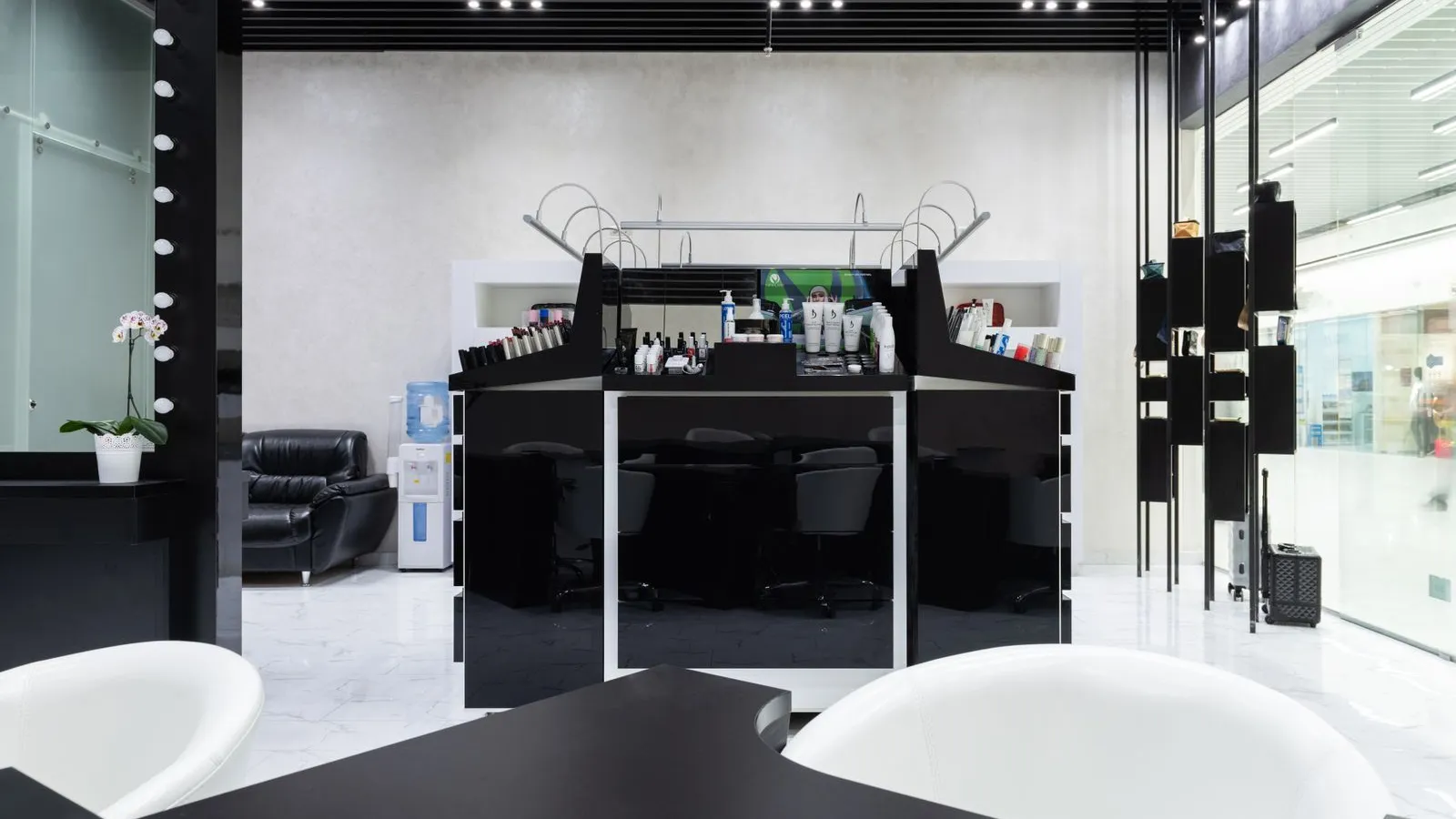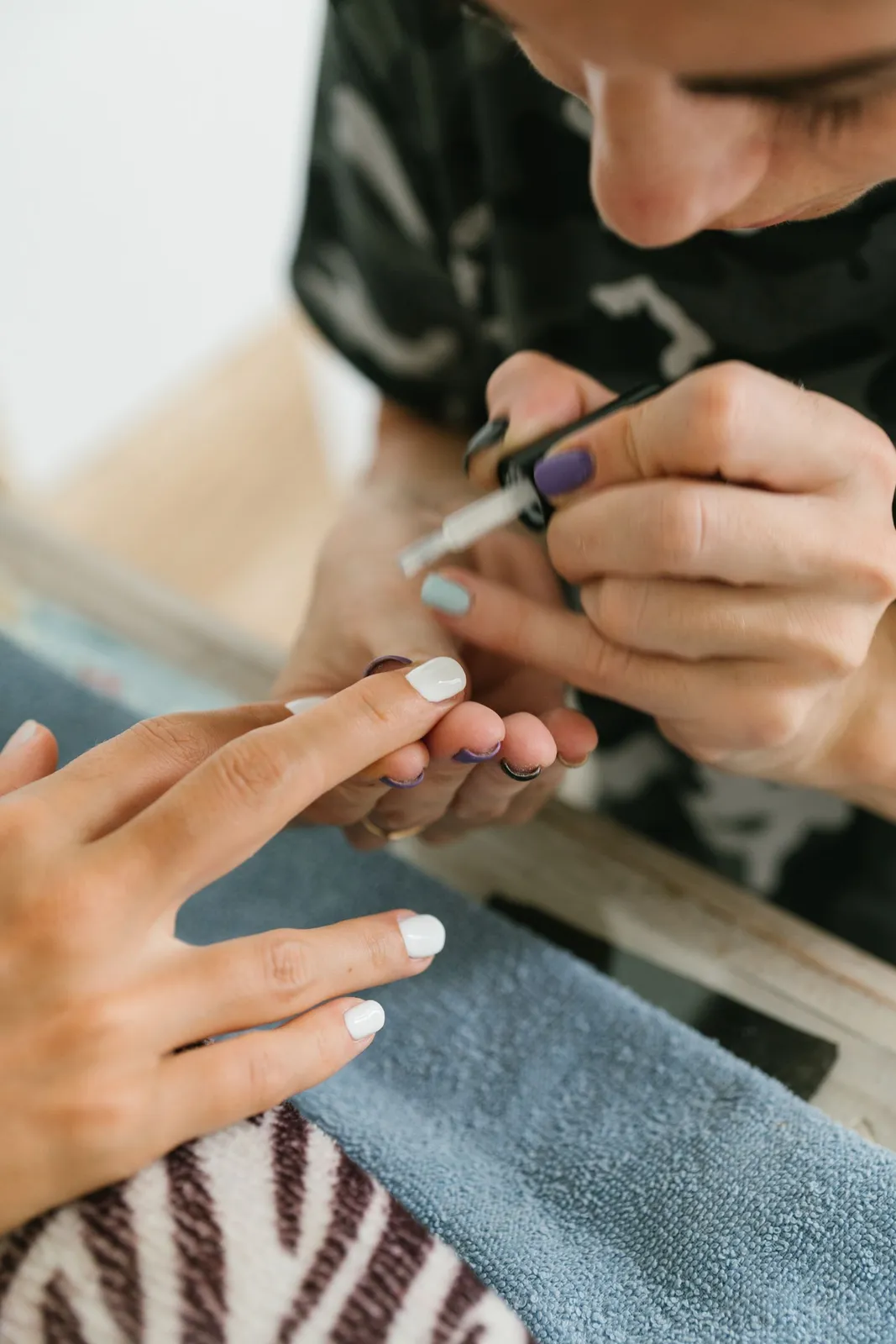
A nail salon can start smaller than a hair salon: no wash basins, fewer machines, and stations that fit a narrow unit. What it needs instead is good air, careful cleaning, and a menu that makes every hour at a station pay.
This guide covers the decisions in order: the space, the permits, cleaning, the menu, pricing, and keeping your technicians booked. Peso figures are examples to replace with your own.
Plan stations, chairs, and air
Count what you will offer, then size the space. Manicure tables and pedicure chairs take different room, and a pedicure chair with a foot basin needs water and a drain.
- Ventilation: acrylic liquid, polish, and remover give off strong fumes. Plan air that moves out of the room, not only air conditioning that moves it around, and extraction at the tables if you do acrylics.
- Light: bright, even light at every table. Technicians do fine work, and clients judge colors by it.
- Lamps and power: gel needs a UV or LED lamp at each station, plus drills and warmers. Count the outlets.
- Storage: a closed cabinet for clean tools and a separate place for used ones, so the two never mix.
Register the salon and get your permits
- Register the name with DTI as a sole proprietor, or with the SEC as a corporation or partnership.
- Get a barangay clearance where the salon is.
- Apply for a mayor's permit with the lease, a zoning clearance, a fire safety inspection, and a sanitary permit.
- Register with BIR (Form 1901 for a sole proprietor), receive Form 2303, and set up your invoices and books before the first sale.
- Register as an employer with SSS, PhilHealth, and Pag-IBIG before your first hire.
A nail salon falls under the Code on Sanitation's rules for beauty establishments, the same as a hair salon: a sanitary permit from the local health officer renewed each year, and a health certificate for you and every technician. Ask your city health office what its inspector checks before you open.
Clean every tool between clients
Clients notice cleaning, and they talk about it. Make it a routine every technician follows the same way, not a judgment call on a busy day.
- Clean metal tools of dust and residue, then disinfect them for the time the product's label says.
- Throw away single-use items, such as files, buffers, and orange sticks, or give them to the client.
- Drain, scrub, and disinfect each foot basin after every pedicure, liners included.
- Wipe the table, lamp, and armrests before the next client sits down.
Buy enough tool sets that a technician never waits for one to finish soaking. That wait is what tempts people to skip a step.
Build a menu clients can add to
Keep the base menu short and make the extras add-ons. A client who books a gel manicure and adds nail art and a cuticle treatment spends more without you listing every combination.
| Base service | Typical add-ons |
|---|---|
| Classic or gel manicure | Nail art per nail, French tips, gel removal |
| Classic or gel pedicure | Foot scrub, callus treatment, paraffin |
| Extensions | Length, shape, chrome or cat-eye finish |
Give each add-on its own time as well as its price. Ten nails of hand-painted art can add half an hour, and a booking that ignores it runs into the next client.
Price by the station hour
Work out what one station costs you for an hour, then check each service covers it.
Here is an example with made-up numbers. Rent and power are ₱50,000 a month for five stations open 26 days, about ₱385 a station per day, or about ₱55 an hour over a seven-hour busy day. A 60-minute gel manicure at ₱600 carries ₱55 of that, perhaps ₱60 of gel and supplies, and ₱240 at 40% commission. About ₱245 is left for everything else.
Run the same sum for extensions, which take longer and use more product. For a full method, see how to make a salon price list.
Keep technicians booked
- Let clients book several services in one visit, so a manicure and pedicure land back to back, or side by side with two technicians.
- Ask for a deposit on long sets, such as a full set of extensions, so a no-show does not empty two hours. See how to reduce no-shows.
- Rebook at checkout. Gel and extensions need a fill or removal in a few weeks, so book it before the client leaves.
- Post your work on Instagram and Facebook with your booking link. See how to take bookings from Instagram and Facebook.
In Onsuki, add-ons add to both the price and the time of a booking, a deposit can be set on just the long services, and one service can carry a price for each technician level. Polish and gel can be tracked as products with a low stock filter for reordering. See Nail salons and Appointments.