A pickleball venue sells court hours. The courts cost a lot to build and very little to run for one more hour, so the business comes down to two numbers: what you spend to build, and how many hours a week you sell.
This guide covers both, in order: the lot, the build, the permits, the rates, and the ways to sell an hour beyond a simple rental. Build costs come from a Philippine builder's published 2026 figures. Rates are made-up examples to replace with your own.
Measure the lot before anything else
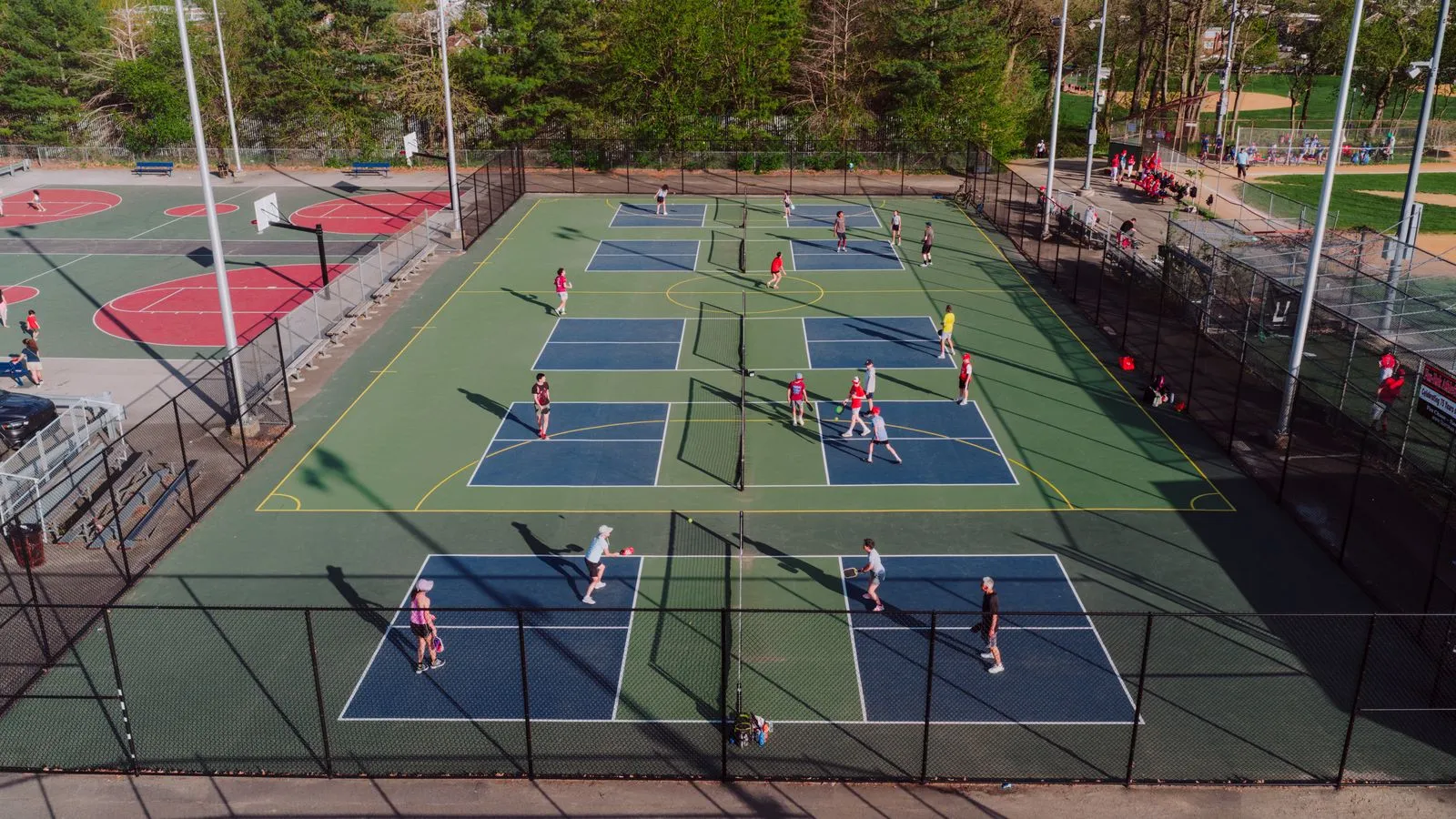
The court itself is 20 by 44 feet. Players need room to run past the lines, so plan at least 30 by 60 feet for each court, about 167 square meters, and 34 by 64 feet, about 202 square meters, if you have the space. Draw the courts on a plan of the lot before you talk to a builder.
- Count the courts the lot really holds after setbacks, a walkway, and a waiting area.
- Leave room for what players need: parking, a comfort room, drinking water, and a shaded place to wait between games.
- Talk to your neighbors and the barangay early. Paddles and voices carry, and evening play under lights is when most people can come.
Start with your land: owned, leased, or shared with an existing business. A long lease matters here, because you'll want years to earn back what you build.
Choose open, covered, or indoor
In the Philippines, the roof decides how many days a year you can sell. Open courts are cheapest to build but lose hours to rain and midday heat. A roof keeps play going in the rain and shades the court at noon. A fully enclosed hall costs more again.
One Philippine builder's published planning ranges, as of 2026, for each court:
| Build | Per court, as of 2026 |
|---|---|
| Open, no roof | ₱490,000 to ₱820,000 |
| Tarp roof | ₱780,000 to ₱1,250,000 |
| Metal roof | ₱1,330,000 to ₱1,840,000 |
Those ranges include the slab, fill, a retaining wall, a polished and painted finish, and lighting. Get at least three quotes for your own lot, because soil, access, and drainage change the number more than anything else.
Budget for what the build quote leaves out
A court quote often covers the playing surface and little else. The same builder's figures leave out a list of things every venue needs, so add them to your budget yourself.
- Nets, posts, and fencing around and between courts.
- A comfort room and a waiting area.
- Permits and design fees, including drawings for the building permit.
- VAT on the contract, if the builder charges it.
- Drainage beyond the court pad, and any surprises in the soil.
- Running money for the first months: power for the lights, staff, cleaning, and repairs, before the courts are busy.
Get permits for the build and the business
A court venue needs two sets of papers: one to build, and one to operate. Start the building permit first, because it decides when you can break ground.
- Building permit from your city or municipality's Office of the Building Official, before construction or renovation starts.
- Certificate of occupancy from the same office once the build is done. A structure can't be used until it's issued.
- Business name with DTI for a sole proprietor (₱200 to ₱2,000 by scope, plus ₱30 documentary stamp tax, as of 2026), or the SEC for a corporation or partnership.
- Barangay clearance, then a mayor's permit from the business permit office, which asks for the lease or title, a zoning clearance, a fire safety inspection, and a sanitary permit.
- BIR registration, with Form 1901 for a sole proprietor through ORUS or your Revenue District Office. Set up your invoices before the first booking.
Work out what a court hour has to earn
Nobody can tell you how busy your courts will be, so work backward from your costs. Here is an example with made-up numbers: four courts, open 14 hours a day, 30 days a month, is 1,680 court hours to sell.
- Running costs, such as land, power, staff, and upkeep, come to ₱180,000 a month.
- At an average of ₱500 an hour, you need 360 booked hours just to cover them. That is about 21% of your hours.
- At 35% booked, 588 hours bring in ₱294,000, which leaves ₱114,000 a month toward the build.
- A ₱3,000,000 build then takes about 26 months to earn back, before any repairs.
Run the same sums with a lower average rate and a lower occupancy. If the venue only works when every evening is full, the build is too big for the lot or the rates are too low.
Set hourly rates by time of day
Some hours will sell out days ahead and others will sit empty. A flat rate charges both the same. A peak rate earns more from the hours that sell anyway, and an off-peak rate is worth offering only if it brings in players you wouldn't have had.
Start with one base rate, open, and watch a month of bookings. Then add a peak window where you turn players away, and an off-peak window where courts sit empty. For how to test each rate before you set it, see how to set court and bay rates for peak hours.
Sell open play and packs of hours
Not every player has three friends free at 7 PM. Open play sells a court by the player, so solo players get a game and a reason to come back. Price it against the rental it replaces: a two-hour session on a court that would rent for ₱1,600 has to bring in more than that at the turnout you actually get.
Packs of hours get regulars to pay up front. A 10-hour pack at a small discount is cash in the bank and a reason to keep coming. Coaching fits beside both: a lesson booked with a court, or a clinic for beginners. See how to run open play at your courts.
Take bookings and payments without a group chat
A Facebook group and a shared spreadsheet work for one court. With four, two people end up promising the same court at 7 PM. Put the courts on a booking page before you open, so your first players learn to book there.
In Onsuki, each court type has an hourly rate, the shortest and longest booking, and how many players are included, with a fee for each extra player. Players choose a length and a time, or tap the court and hours they want on a grid. Peak and off-peak rates price each hour by the window it falls in, and a pack of hours pays for court time at any hour. Open play has its own price per player and player limit, and can run across several courts held together. Players can add a coach to a court booking. See Courts and Pickleball courts.
Players pay with your own GCash, QR Ph, or bank account when they book, or by card and e-wallet once you request PayMongo from Settings. The Busiest Times report shows bookings by day and hour, so your peak windows come from your own bookings. See Payments.